


Museum bunker
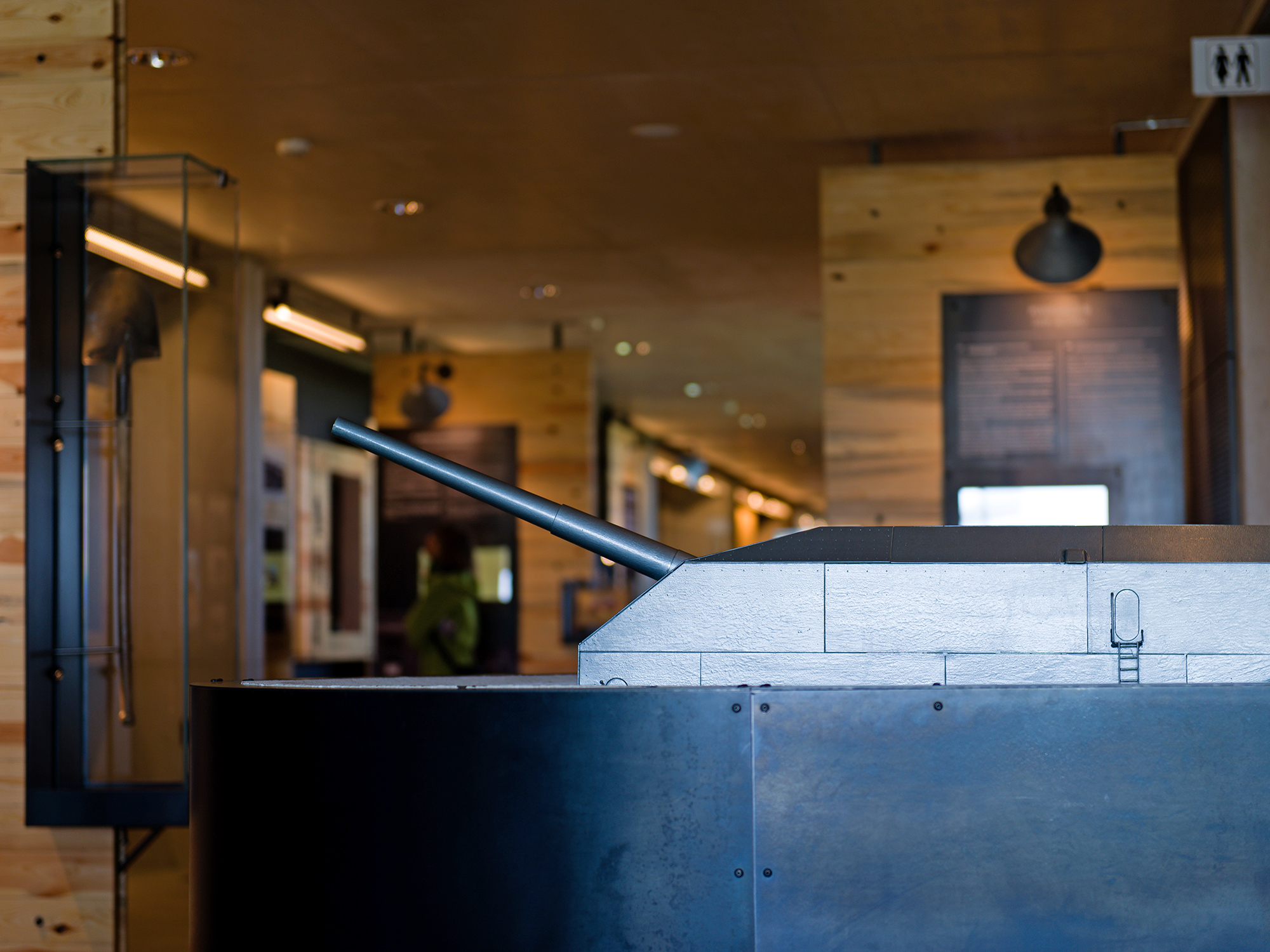
The museum bunker has a total area of approximately 2500m2, making it one of the largest bunkers the Germans built in Denmark during 2nd World War. In the center of the museum bunker stood one of the four 38 cm guns that made up the German coastal battery "Hanstholm II".
The guns could fire their shells from a distance of 55 km. Together with a similar battery at Kristiansand in Norway, on the other side of the Skagerrak, the battery in Hanstholm would block the 115 km wide waters between Denmark and Norway.
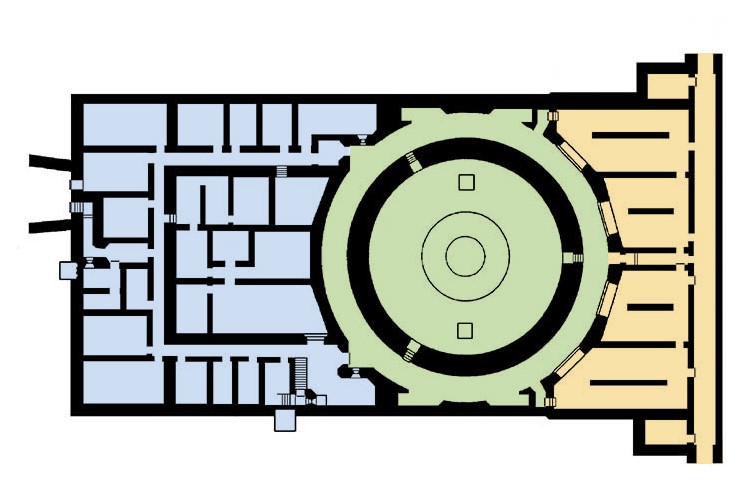
The museum bunker consists of three main parts: the ammunition room with room for 100 rounds, the large open gun pit and the crew and technical department. One cannon required a total crew of 90 soldiers, who all lived in the rooms underground.
The big gun has not been preserved. However, many of the bunker's rooms have been restored and brought back to their original appearance with original equipment, so you can experience what life was like for the soldiers in the bunker. The other rooms contain exhibitions that highlight different aspects of the history of the fortifications.
Museum bunker
The museum bunker has a total area of approximately 2500m2, making it one of the largest bunkers the Germans built in Denmark during 2nd World War. In the center of the museum bunker stood one of the four 38 cm guns that made up the German coastal battery "Hanstholm II".
The guns could fire their shells from a distance of 55 km. Together with a similar battery at Kristiansand in Norway, on the other side of the Skagerrak, the battery in Hanstholm would block the 115 km wide waters between Denmark and Norway.
The museum bunker consists of three main parts: the ammunition room with room for 100 rounds, the large open gun pit and the crew and technical department. One cannon required a total crew of 90 soldiers, who all lived in the rooms underground.
The big gun has not been preserved. However, many of the bunker's rooms have been restored and brought back to their original appearance with original equipment, so you can experience what life was like for the soldiers in the bunker. The other rooms contain exhibitions that highlight different aspects of the history of the fortifications.
Blue zone
Crew room and machine center
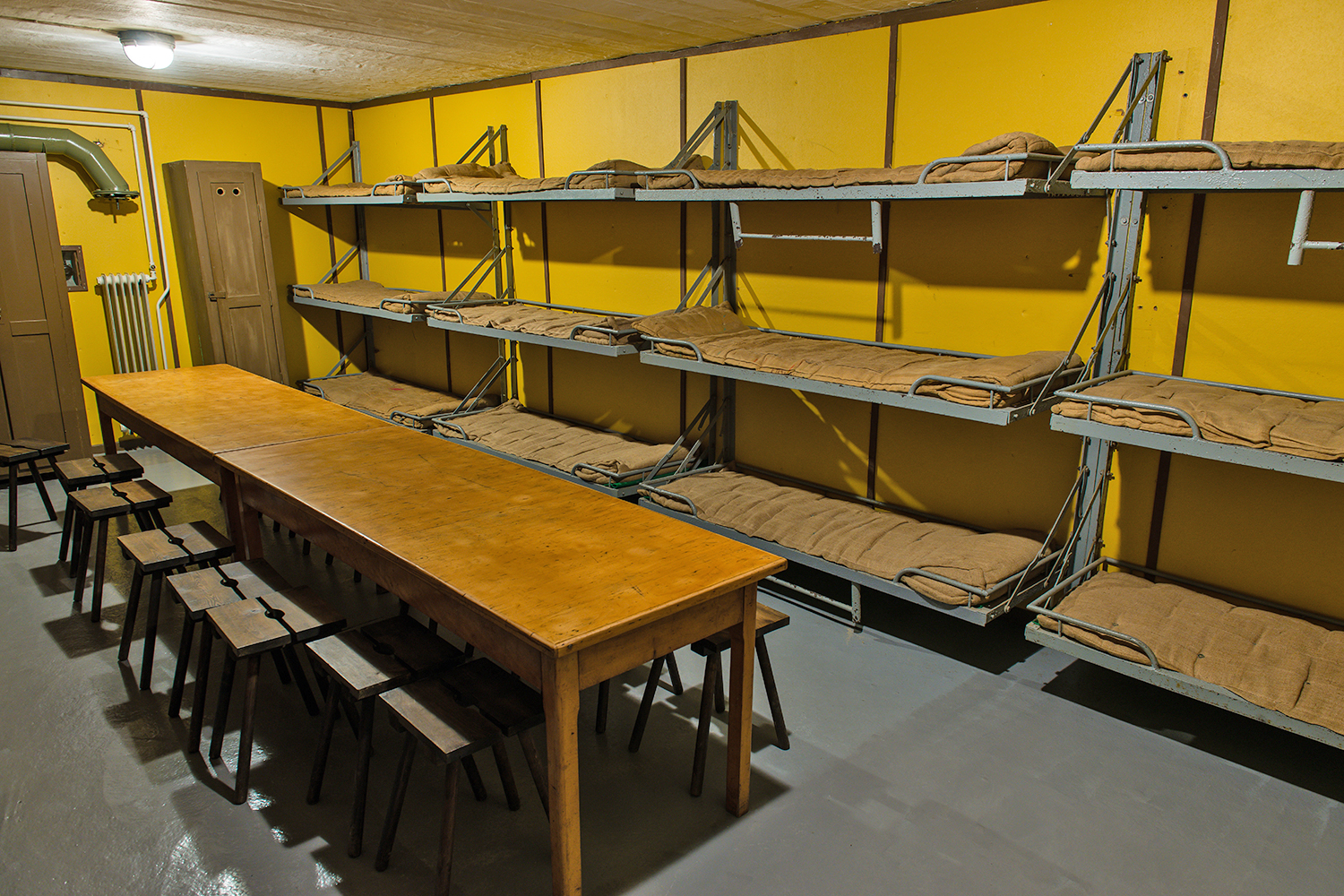
The bunker's crew room and technical department are located on the south side of the gun well. This part of the bunker was gas-tight and completely self-sufficient in water and electricity. The crew rooms were located along the outer sides of the bunker and had bunks for the entire gun crew of around 90 men.
Inside this part of the bunker were the technical installations. The engine room contained two diesel engines; a small one (56 HP) to supply the bunker with light, and a large one (200 HP), which provided power to operate the cannon. In addition, this part of the bunker contained shower and washrooms, toilets and a well. Finally, there was a central heating system that heated the entire bunker using hot water from radiators in the individual rooms of the bunker.
Green zone
The gun well
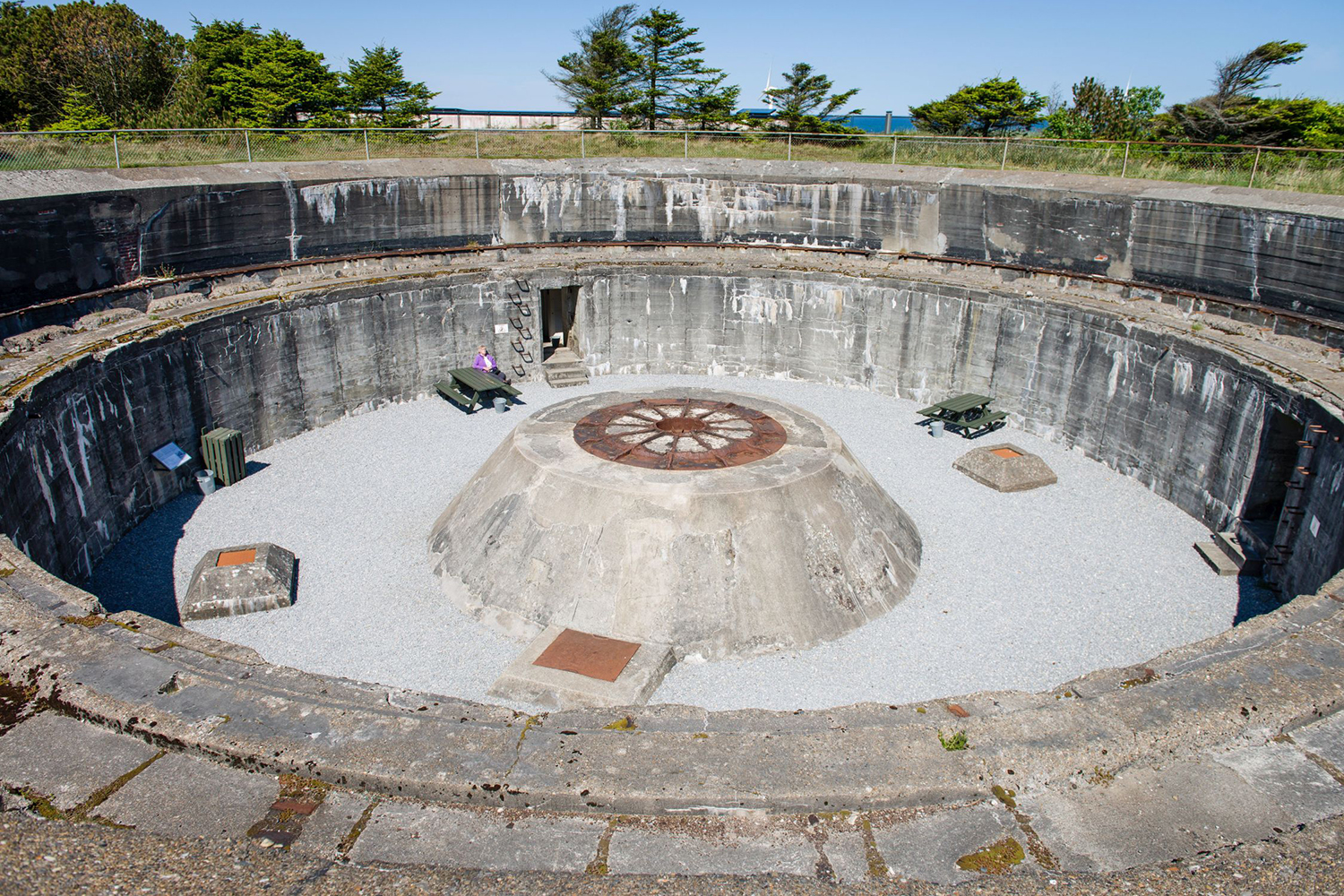
The turret with a 38 cm cannon stood in the gun well, which forms the center of the bunker complex. The cannon and its turret have long since been removed. However, the dimensions of the gun pit are impressive enough in themselves; 30 meters in diameter and 5 meters deep. In the middle of the gun pit still stands the 2-meter high plinth to which the gun turret was attached with 24 bolts.
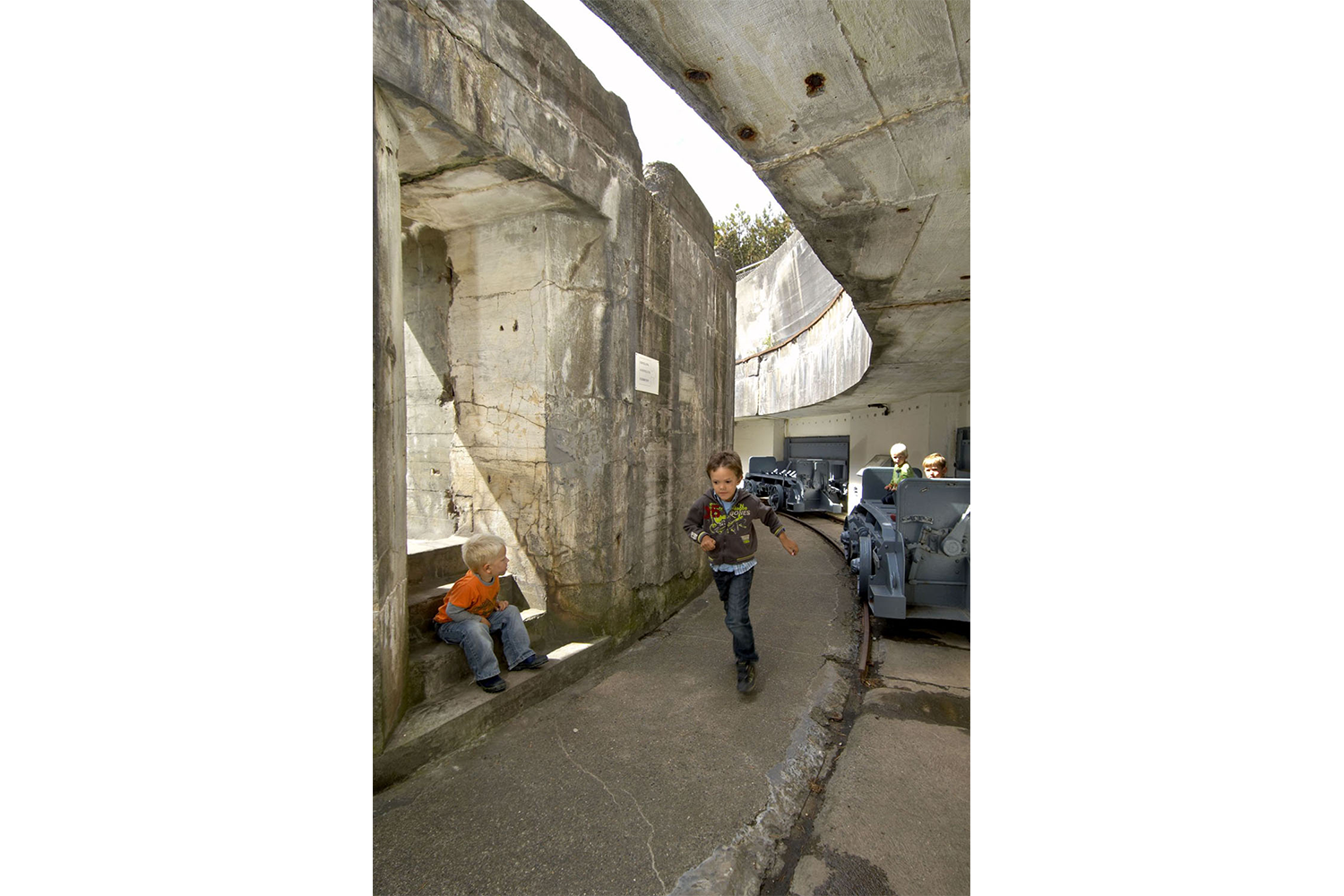
The ammunition corridor that runs around the gun well. In the background, you can see the hatches to the ammunition rooms.
Orange zone
Ammunition room
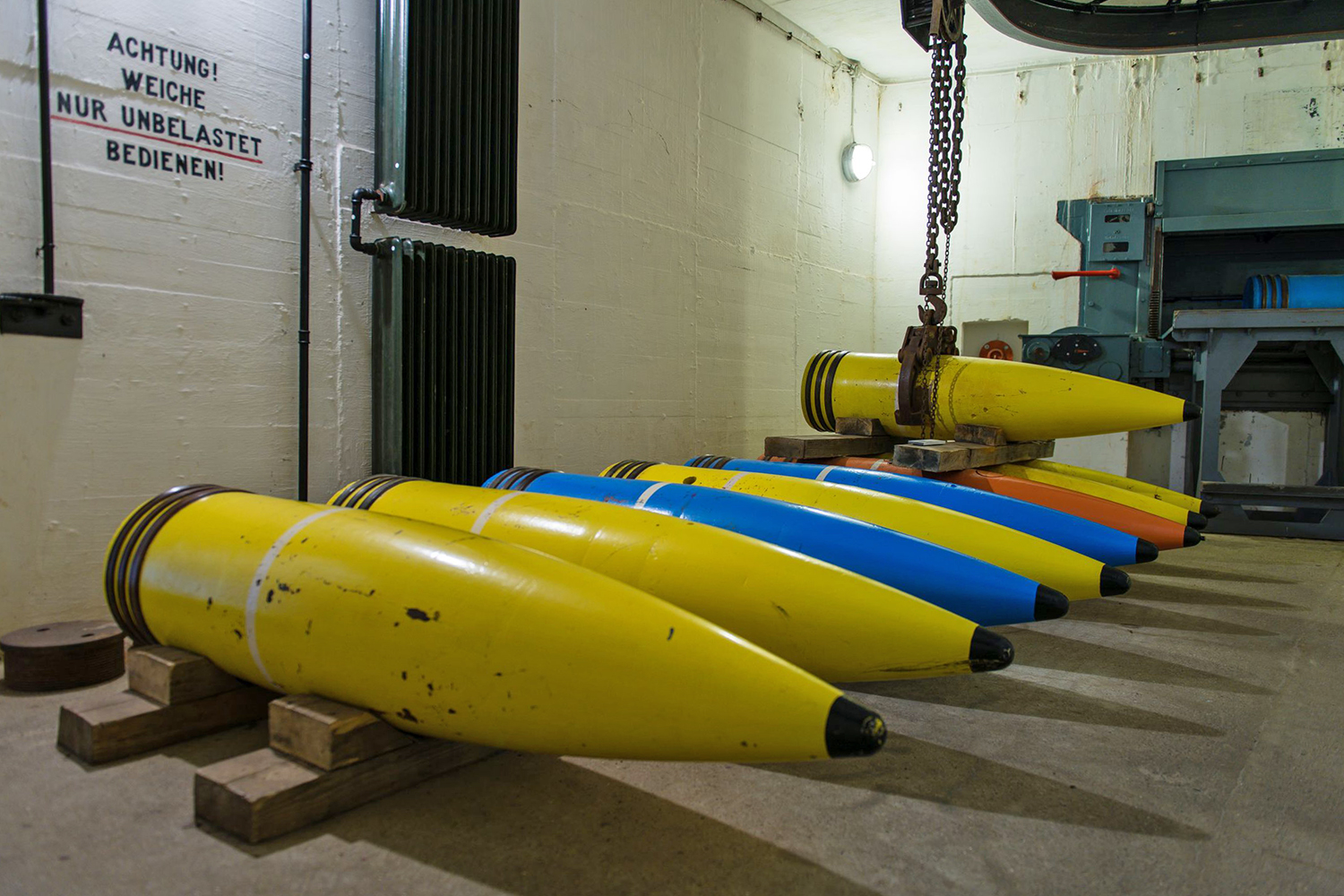
The bunker's ammunition magazines are located on the north side of the gun well. There were two rooms for powder charges and two for grenades. The four large ammunition rooms had room for a total of approximately 100 38 cm shells and charges.
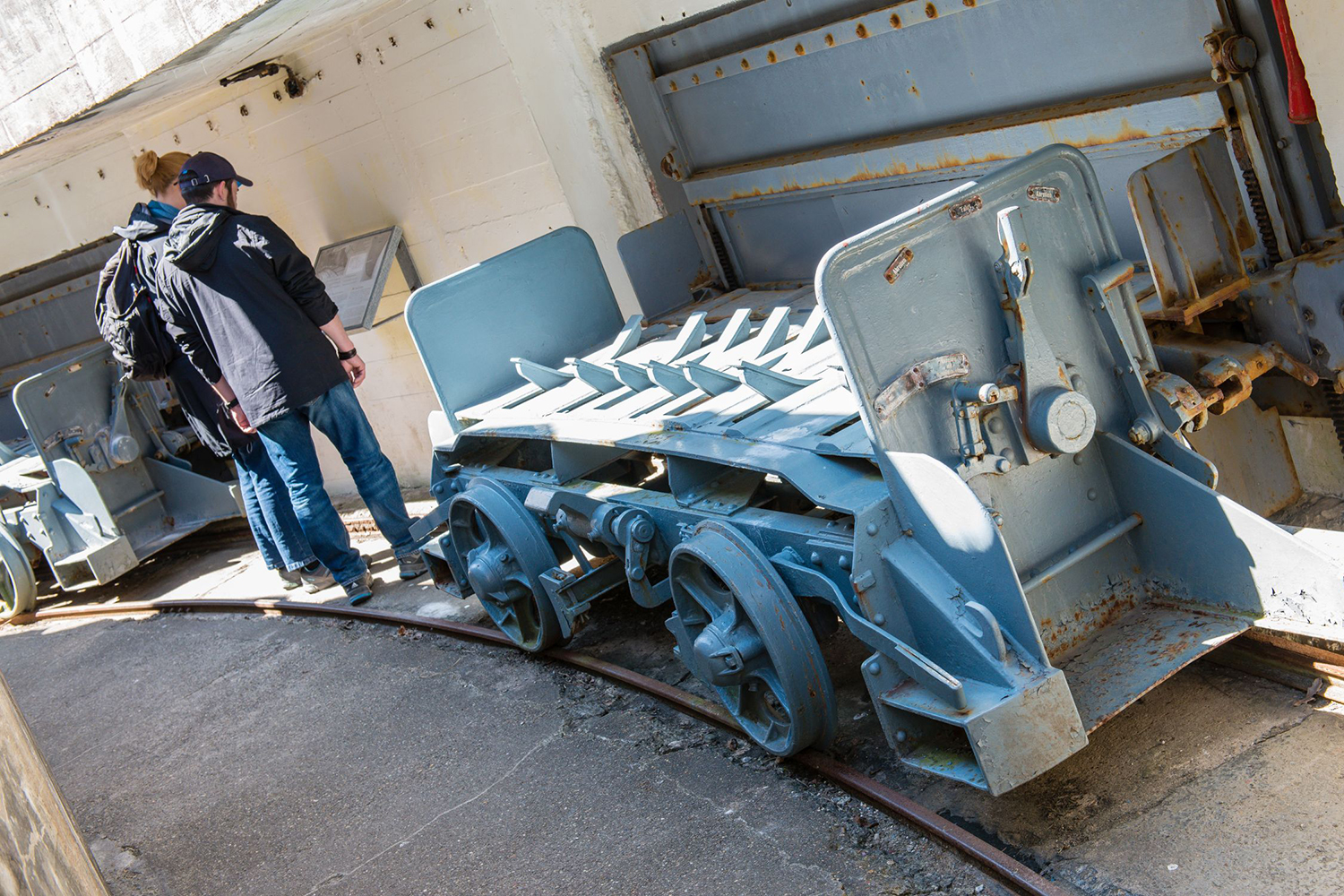
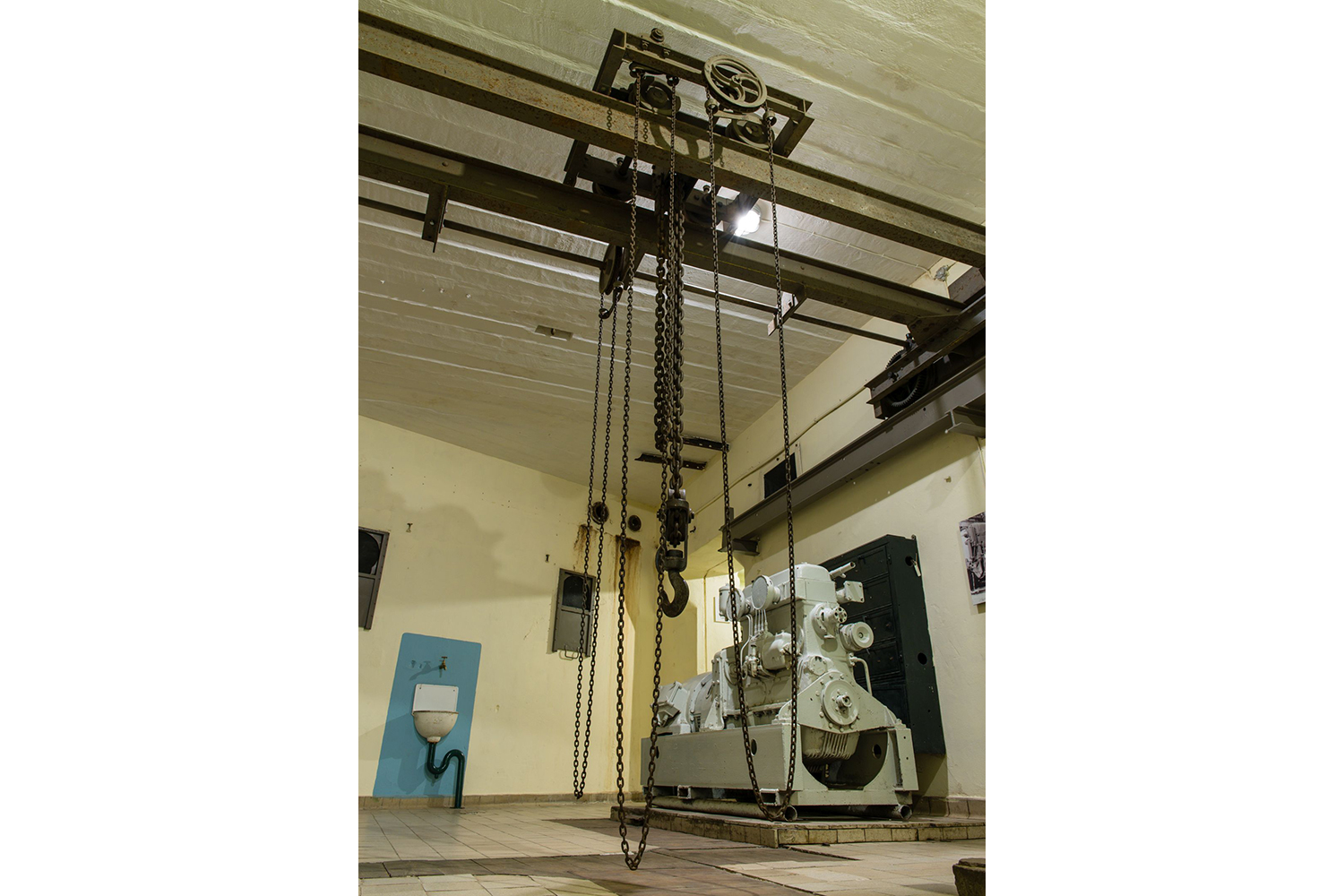
The heavy shells and charges were moved around using heavy-duty hoists that ran on rails in the ceiling. The shells and powder charges were transported to the ammunition rooms from large ammunition bunkers in the hinterland using a narrow-gauge ammunition track that ran through the bunker.
Blue zone
Crew room and machine center
The bunker's crew room and technical department are located on the south side of the gun well. This part of the bunker was gas-tight and completely self-sufficient in water and electricity. The crew rooms were located along the outer sides of the bunker and had bunks for the entire gun crew of around 90 men.
Inside this part of the bunker were the technical installations. The engine room contained two diesel engines; a small one (56 HP) to supply the bunker with light, and a large one (200 HP), which provided power to operate the cannon. In addition, this part of the bunker contained shower and washrooms, toilets and a well. Finally, there was a central heating system that heated the entire bunker using hot water from radiators in the individual rooms of the bunker.
Green zone
The gun well
The turret with a 38 cm. cannon stood in the gun well, which forms the center of the bunker complex. The cannon and its turret have long since been removed. However, the dimensions of the gun pit are impressive enough in themselves; 30 meters in diameter and 5 meters deep. In the middle of the gun pit still stands the 2-meter high plinth to which the gun turret was attached with 24 bolts.
The ammunition corridor that runs around the gun well. In the background, you can see the hatches to the ammunition rooms.
Orange zone
Ammunition room
The bunker's ammunition magazines are located on the north side of the gun well. There were two rooms for powder charges and two for grenades. The four large ammunition rooms had room for a total of approximately 100 38 cm shells and charges.
The heavy shells and charges were moved around using heavy-duty hoists that ran on rails in the ceiling. The shells and powder charges were transported to the ammunition rooms from large ammunition bunkers in the hinterland using a narrow-gauge ammunition track that ran through the bunker.
PERMANENT EXHIBITION
Museum bunker
The museum bunker was built by the German Navy in 1941 and housed one of the large 38 cm cannons.
The ammunition compartments held a total of 100 rounds for the guns. The heaviest of the shells weighed 800 kg, so they were transported around the area on small railroad cars. Inside the bunker, the shells were moved around using hoists that ran on rails under the ceiling.
The gun turret with the 38 cm gun was strapped to the large plinth in the middle of the gun emplacement.
The crew section housed the gun crew, which consisted of 90 soldiers. Space in the bunker was tight, so the soldiers slept in three-story bunks. However, the bunker was very modern for its time and also contained toilets, showers, central heating, ventilation and emergency power.
PERMANENT EXHIBITION
Museum bunker
The museum bunker was built by the German Navy in 1941 and housed one of the large 38 cm cannons.
The ammunition compartments held a total of 100 rounds for the guns. The heaviest of the shells weighed 800 kg, so they were transported around the area on small railroad cars. Inside the bunker, the shells were moved around using hoists that ran on rails under the ceiling.
The gun turret with the 38 cm gun was strapped to the large plinth in the middle of the gun emplacement.
The crew section housed the gun crew, which consisted of 90 soldiers. Space in the bunker was tight, so the soldiers slept in three-story bunks. However, the bunker was very modern for its time and also contained toilets, showers, central heating, ventilation and emergency power.
ACTIVITIES
Playing with Chicken Rings
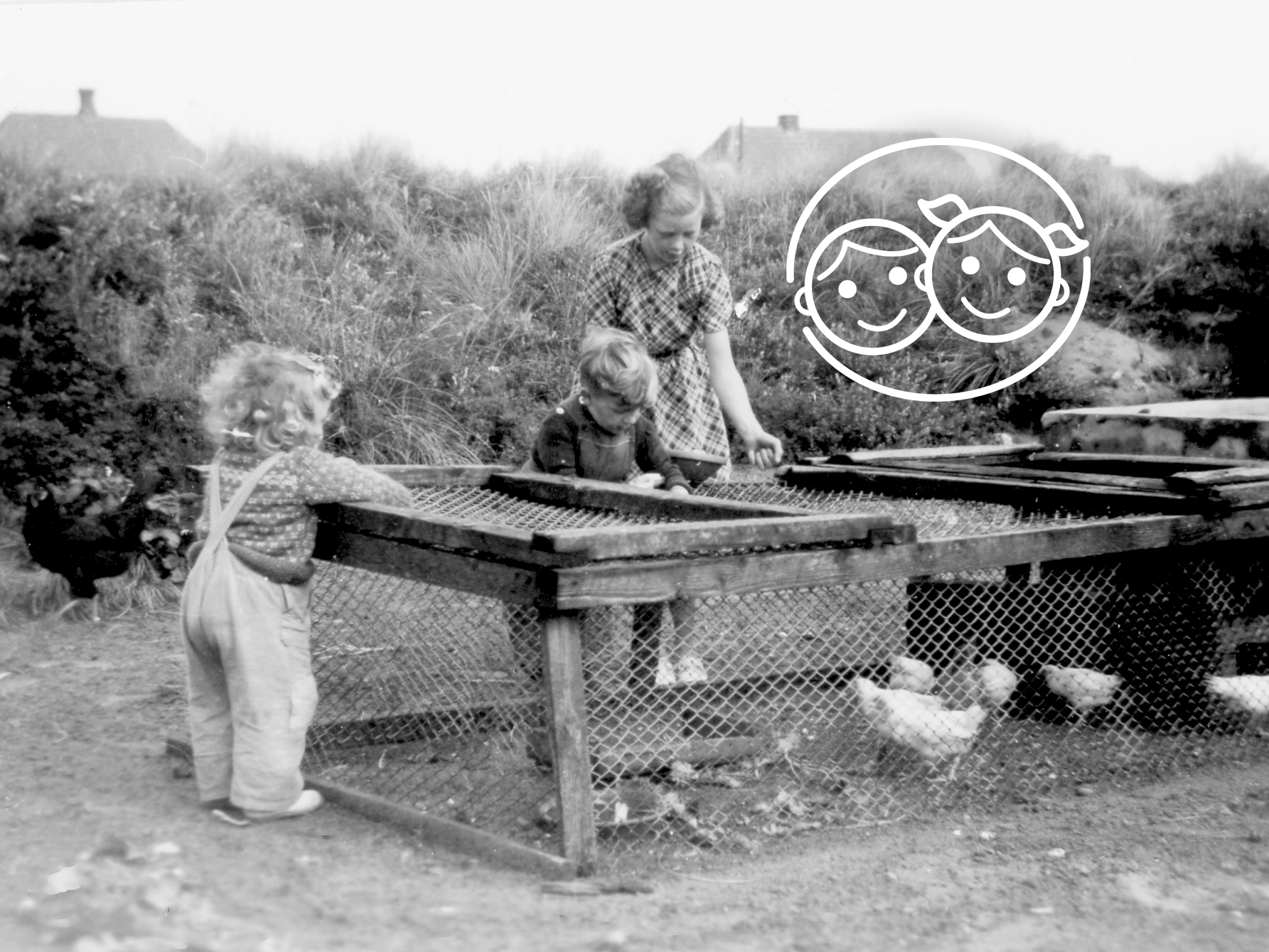
Playing with Chicken Rings
Night at the bunker museum
 20 min from Hanstholm
THISTED MUSEUM
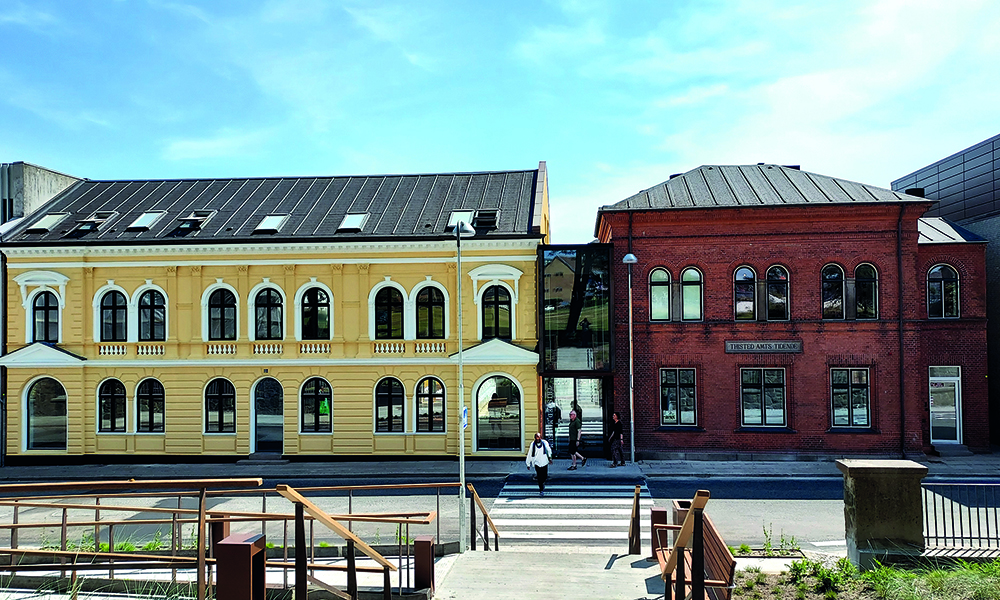
"Thylands National Museum" is located in the center of Thisted. Here you can step into the world of the past and experience modern exhibitions on everything from spectacular archaeological finds, including the Kallerup find and a rune stone. Kallerupfundet and a rune stone, to stories about the new times with Thylejren and the arrival of surfers on the beaches. In the attic you'll find a special children's storage room.
Thisted Museum also offers the exhibition J.P. Jacobsen's World.
- ARCHAEOLOGY
- THE CITY
- J. P. JACOBSEN
- CHILD-FRIENDLY
- LOCAL IDENTITY
- MUSEUM STORE
 50 min from Hanstholm
HELTBORG MUSEUM
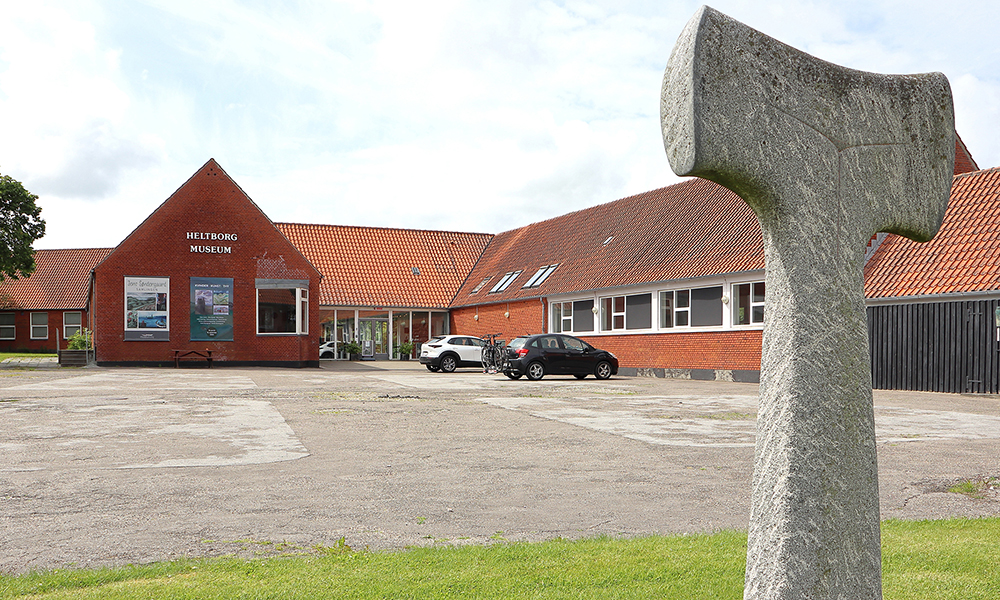
Perhaps the most beautiful view of the Limfjord landscape? In Heltborg you can experience changing art exhibitions, including the museum's large collection of Jens Søndergaard paintings. You'll also find an exhibition about agricultural tools in the time before the tractor.
During the summer holidays there are children's activities and live entertainment in the Iron Age courtyard behind the museum.
- ART COLLECTION
- SPECIAL EXHIBITIONS
- IRON AGE FARM
- MUSEUM STORE
- DEVELOPMENT
- BEFORE THE TRACTOR
 20 min from Hanstholm
VORUPØR MUSEUM
In the boat builder's old house, you'll find the coziest museum in Thy. In the old boatyard you can see a traditional clinker-built boat and a range of tools from fishing, boat building and rescue services. Inside the house, we tell stories about the people on the coast and their relationship with the berries of the dune heath. What is the taste of Thy?
Vorupør Museum offers many activities for children, including building your own boat in the workshop.
- COASTAL CULTURE
- WORKSHOP
- CHILD-FRIENDLY
- FOOD CULTURE
- THE TASTE OF THY
- HYGGE.